EPISODE 1.1 – HOW MURALS (RE)PRESENT THE PAST AND MARKET THE FUTURE
00:11 Welcome to the PODpodcast. Where we talk about the politics of display and the way that murals represent history and market in future. I’m Katerina Nemcova, Communication PhD student from the University of Arizona. I’m Stephanie Narrow, History PhD student from the University of California, Irvine. And I’m Christopher McGeorge, Art History PhD Candidate at the University of Southern California. This podcast is the result of a week-long workshop supported by the National Humanities Center and San Diego State University’s Digital Humanities Center. Uniting our training in art history, public history, and public relations, this podcast explores the history and contemporary murals in San Diego.
01:01 So today we’re talking with Dr. Orion Teal. Dr. Teal is an Assistant Professor of history at El Camino college in Torrance, California, and he holds a PhD in history from Duke University. He has many professional backgrounds and interests – he practices oral history and some of his research looks into the intersections of social space, racial formation, urbanization, and uh, radical political culture and the 20th-century United States. And we’re really excited to have you here and thank you for donating and volunteering your morning, and I’m sure you could be doing many other things. And so we’re excited to have this conversation with you, specifically about murals and public memorials and how they tell or hide or conceal certain histories about immigration, labor, race, gender and class. So welcome. Great. Well, thank you that glad to be here. So, you know, you put a lot of your research focuses on the, the [American] left and the left during the postwar era. What did they look like in the 1930s, you know, during, um, Franklin Roosevelt’s presidency and sort of, you know, this, this transformation and, um, in American social life you have the Great Depression, but you also have the strongest resurgence in federal projects that are helping Americans with jobs. Um, you know, welfare. I’m wondering if you could speak a little bit about that.
02:23 Yeah, yeah. The history of, um, you know, the American left during that period is, is pretty fascinating because they sort of shift from, um, this, you know, kind of hardcore, sort of revolutionary, uh, stance in the early 1930s when they are seeing capitalism, you know, collapse in, it’s basically, you know, everything had said as a small beleaguered movement during the 1920s seemed to come to pass. And they attract a great deal of attention, um, at, you know, at rallies for, uh, and also create organizations like the unemployed councils and attendance and things like that, that provide this grassroots support and really attract a lot of attention, uh, from average everyday people. And that’s how a lot of people come into the ranks. And then a lot of student radicals too. And so in, in, um, you know, campuses throughout the nation, uh, become very political and we kind of forget that, that, um, politicization of the campus. And so if we see that and through the, um, you know, the ways in which that kind of radical politics becomes part of the WPA, um, you know, art projects. Um, and we can see the roots of that. Universities see evidence of that at least throughout including some of the murals that you’re looking at.
03:39 Yeah. And I’m hoping that, can you give us a little bit of background on the WPA, the works progress administration, um, one of, uh, the, they call it the alphabet organizations under FDR. And someone wondering if you can give us a little bit of background on the WPA, some of its schools and its iterations of various arms of the WPA.
04:00 Yeah, so WPA we, um, was created and it was in 1935 and this is part of Roosevelt’s second new deal. Um, sort of around of again, these alphabet organizations, right. Or, or, um, uh, agencies within the federal government addressing, um, you know, a whole host of problems that are arising from the great depression, from housing insecurity to unemployment to, um, the problem of integrating, you know, rural America into the electrical grid. All sorts of things that come out of, um, these new deal era programs. And that second new deal is really attempt by Roosevelt to, um, to make a case for the 1936 election. So he actually shifts even more, uh, into, uh, economic populist to kind of frame. And WPA is part of that, but it’s a pretty significant shift because it means employing Americans directly, uh, by the federal government. And, um, that was a shift away from kind of earlier policies of um, providing economic stimulus but relying on private, um, companies, right to employ American cc that through programs that came earlier. Um, and along with the WPA and other things that we, um, really remember from it or some of these artistic programs, but they were a smaller segment of, of what the WPA really focused on, which was a lot of infrastructure.
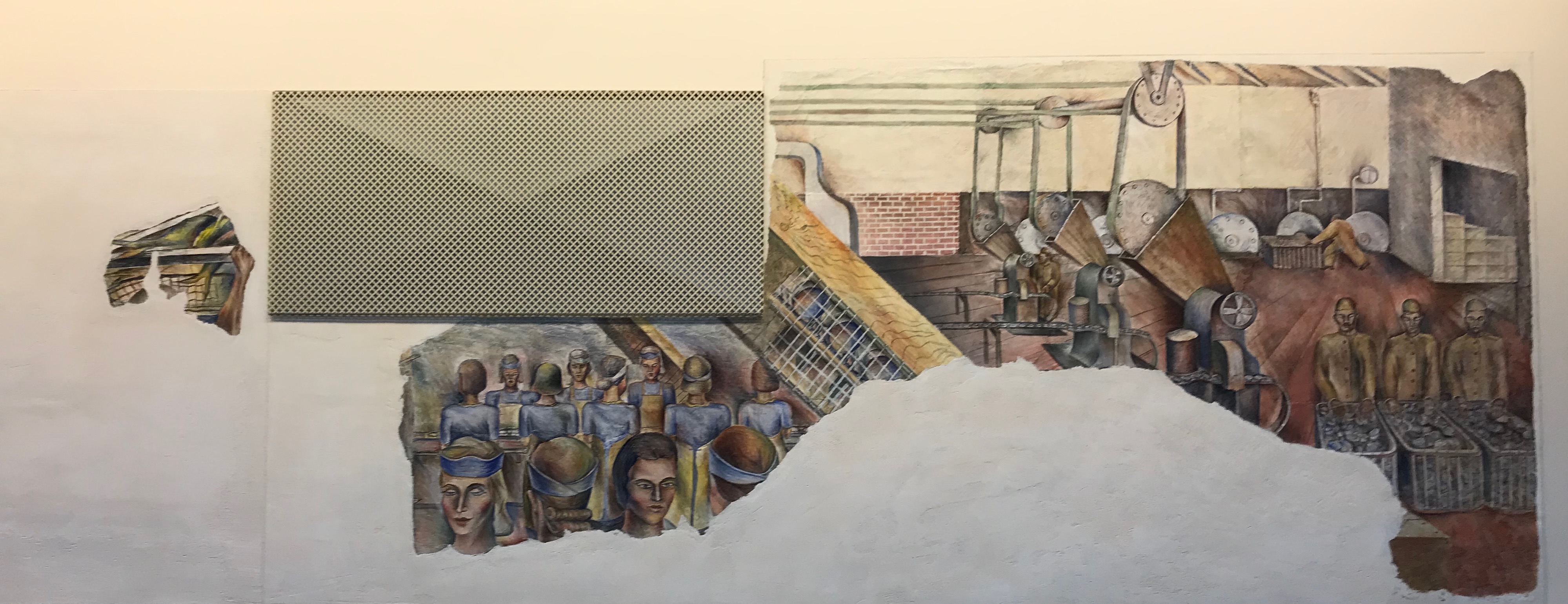
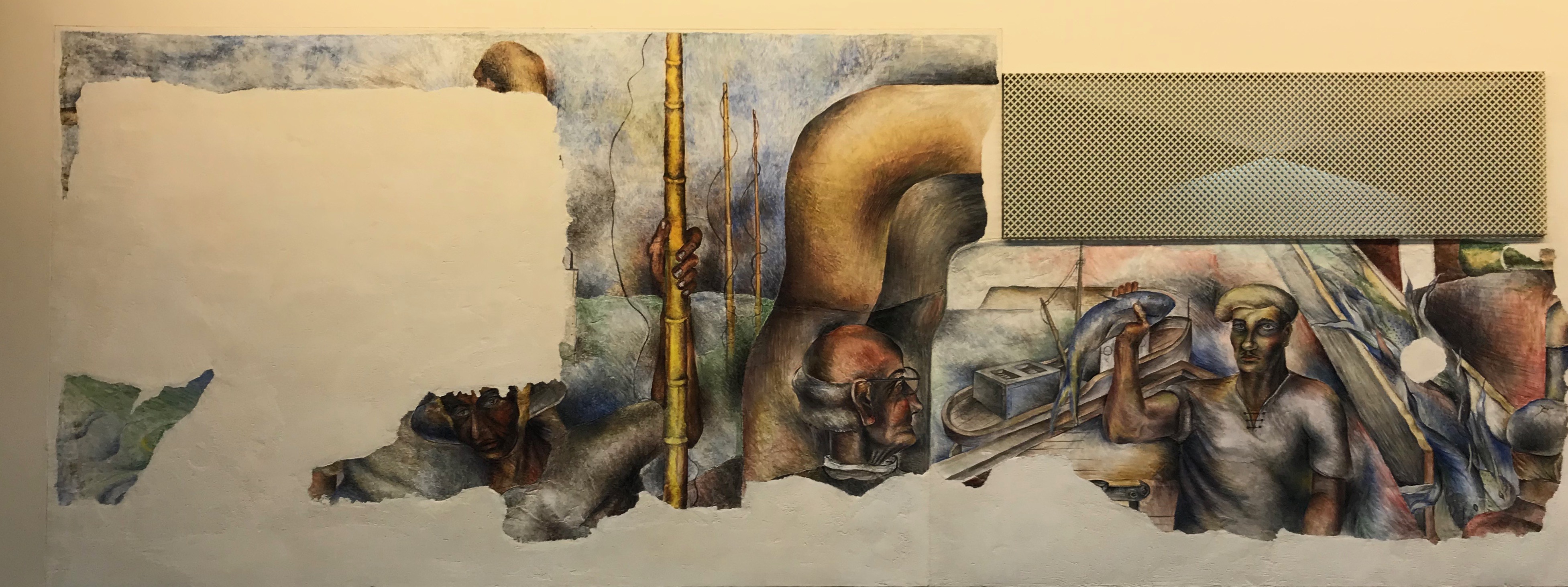
05:31 But it’s really interesting to see the ways that the WPA really makes a mark on places of higher education. And we see that here especially, you know, our team has noticed it at San Diego State University. And one of the things that we came across that one of the, uh, these are librarians brought to our attention was that there are a host of WP murals here on campus, I think two of which have, I believe the original four are still standing. And one of them is housed just a floor above us in the library. And it’s was really interesting and it told stories and perspectives about San Diego that I, you know, I’m a Southern California local, I didn’t grow up in San Diego, but I grew up just north of here in Anaheim and Orange County. And there are things about San Diego that didn’t know about. And so this mural is called San Diego’s industry as painted in 1936 by San Diego state student in sponsor ship or import nation with the WPA.
 “San Diego Industry” Courtesy of San Diego State University
06:29 And if you read the, the mural, which is about 20 to 30 feet long from left to right, it tells a story about um, San Diego’s fishing industry of which, uh, it, it really focuses on Italian and Portuguese immigrants. But there are also a lot of other stories and other perspectives buried in here. So it starts with fishermen leaving their boats, hauling in their catch to an inspector who’s weighing the fish, and then it moves on to a conveyor belt where the fish are being cleaned, gutted, and beheaded. And then next you move on to a cannery where you have women working along production lines, canning these fish. And then towards the end there’s another production line and conveyor belts moving these cans into these big cards being pushed by Chinese processors. Um, and so I just think it’s really interesting that you have all these intersections about immigration, about class, about gender, about um, working class histories and who is featured and who is kind of sidelined and, um, you know, given some, you know, some of the themes and topics that you brought up about, you know, radical politics or immigration and institutions of higher education.
07:43 I’m wondering, you know, you’ve seen at least photos of this mural and I’m wondering what, what it brings to mind or if you can comment on what it reminds you of or what it brings to mind about immigration and labor in this period.
07:57 Yeah. Yeah. I think it’s a wonderful example of, of um, you know, social realism and, and this, this style of this mural style that, um, we see throughout so many of the WPA murals in. It’s actually even, I think, um, you, uh, kind of more artistically interesting than some of the murals that I’ve looked at by the WPA that are, that are very, um, you know, kind of that realist style that’s maybe less, less artistically, uh, aesthetically interesting. But the story that it’s telling is really fascinating too. So, um, having, and I see some themes kind of coming into this that, that are part of large, the larger history, you know, in the, in the 1930s, um, that we can, um, we can see through new deal programs through, uh, labor organizing and then through the question about immigration during that period too. Um, and so I think it’s really fascinating that it moves from the, uh, you know, actual scenes of fishing right.
08:57 To the cannery itself. Right. So going from an area of resource exploitation to right, this really, um, you know, factory situation. And I think that, um, that fits into the, the politics of that period and really what the new deal was trying to do, which in many cases was harnessing America’s natural resources, you know, and abundant natural resources. So we can think about new do programs, focused on creating energy from, you know, hydroelectric power, um, uh, con civilian conservation corps efforts to kind of, uh, focused on reforestation and other things, right. And create trails and recreation opportunities. And, um, and then we, we can also see that focus on the cannery side, uh, in the mural that I think is, um, you know, very evocative of the, of the Labor politics of the period, right. Um, cannery workers and that organizing if of cannery workers was particularly, um, particularly fraught battle in California’s history.
09:57 Um, John Steinbeck writes about this and some of his more journalistic accounts, um, uh, about, you know, kind of, and then I can give Carey McWilliams sort of factories in the fields, you know, but also talking about, um, tech, not a farm worker politics. But then there would be other side of that was that a lot of the cannery processing jobs were where a ripe area for unionization as well. So we see the congress of industrial organization unions coming into the cannery, uh, fields in some of the biggest battles of that period. Um, we’re not maybe as famous as the battles and the auto industry and things like that are on the waterfront. Um, but we’re still really vital for the expansion of, uh, the Labor movement during the 1930s. So I see that through the mural too. Right? So it’s telling those stories. Um, and I think that that Popular Front era kind of politics comes through in the sense of having such a ethnically diverse, um, uh, you know, uh, workforce depicted here. I mean, it was probably very much accurate and sort of account of who was working in both fishing industry and, and canneries. But I think it’s also has a political message too.
11:07 Yeah. And I’m curious, you know, in your undergraduate classes and as an educator and I know that you teach classes on race and ethnicity, and I’m curious about how you might bring a mural and like this, um, bring it into your classroom. How would you use it as a pedagogical tool with a mural like this? I would present it to them and sort of figure out if we could, if we could figure out together the storyline and the important details there,
11:29 and then there’s contexts that they need to. So you try to tease out that context and maybe provide them, I provide them with a little more context so that we can do a little deeper reading. Right? So that might be something like bringing in information about kind of the struggles for, of organizing during that period and labor organizing during that period. Um, and I think that thinking about why also something, you know, like a mural, um, such an Europe would be created. It’s really important to, so thinking about the, the artist’s intent in creating the mural is really important. And that’s an important skill that I think students, um, you know, we always try to hone in the classroom
12:10 as historians. All histories are practices of inclusion or exclusion. And that doesn’t always make them right or wrong. It, it tells different perspectives. Um, I guess the ethics of it are, again, something else that we can talk about, but I’m thinking about this mural and some of the broader histories about the 1930s. Um, how do we evaluate the politics of perspective? You know, you talk about the artist’s choice to include different ethnic groups and different genders within this mural. What does that tell us, or how can we read about, or in four about whose voices get included, whose voices get and whose voices get left out of the narrative and what does that tell us as historians and how can we use that to educate ourselves as well as educate in your case, your students?
12:58 Yeah, that’s an interesting question. I think I’m one of the, you know, one of the points of the Socialists. Yeah. I’m the social realist. I don’t want to confuse the two, even though they’re sort of interrelated, right? Socialist realism and social realism, right? But, but, um, the social realism style, um, was trying at some level to include, you know, Ms Documentarian in some, at some level, right? And trying to document, um, kind of conditions as they actually existed rather than trying to, um, romanticize, you know, poverty or something like that, right. Or work. Um, but at the same level, it yet tries to elevate, I think, um, workers into this kind of, this heroic status, right. Are Everyday people into this sort of the, um, the level of hero and, and that’s something significant because it’s about sort of reworking some of these narratives, these historical narratives that had left out the struggles of everyday people and the contributions of everyday people or the contributions of people who are non-white, right? Or the contributions of women. And that’s one of the things that popular friend, uh, activists really tried to do. And we see similar struggles today, right? We’re thinking about whose narratives, um, should be included kind of how to change the master narrative so that it includes other voices. And that’s been something that, you know, stories have been working, I think, you know, steadily over done, um, you know, last several decades to really change the curriculum and in schools and really think about the ways in which we can bring in these other voices. Right.
14:34 Some people might say that these types of public displays aren’t political, that they’re an aesthetic, but they might not have deeper meaning. And I’m curious, you know, is thinking again about precious, this mural specifically our murals, are public displays, are political, are the hair inherently political or is that US impressing upon, um, these arts and these artists and these aesthetics,
15:00 um, something that may or may not be there? Yeah, I think that, I think it’s hard to argue that they are not pro political, especially in given the context of their creation too. Um, and that’s true for confederate monuments, thinking about their context of their creation. And you know, at the height of the lost cause myth and efforts at segregation, it’s true. FWPA murals thinking about, um, the, you know, the, just the, um, the fact of their creation coming out of a federal program to address the problems of the Great Depression, um, a federal program that was pretty controversial, right? Um, but also very popular, um, at the same time, uh, and fought over. Right? So those politics I think, um, come to play in, in thinking about the mural, it’s hard to, or any mural, it’s hard not to see that politics there, but, but you do see murals also, uh, that are much more political than others. So
16:02 we’d thought like, you know, is it a privilege to not recognize those politics or also is it a privilege maybe to recognize those politics, like, um, to recognize a politics in a mural, especially historical mural, I think requires a certain level of education as well. And so how do you sort of, um, I guess the ability to participate in politics or recognize a particular branch of politics or position politics or yourself within politics? Seems like it might require a certain level of, um, I don’t know, intellectual agility or also awareness as well. And so I guess, how do you position for a broader public, um, maybe like outside of your classroom, people who haven’t made it to your classroom yet, or I didn’t have the opportunity of a classroom. How do you make politics or the politics, especially of images or historical images or even the politics of a contemporary mural accessible? Well,
16:55 yeah, that’s, that’s a great question. I think that, you know, thinking about going back sort of to artist’s intent, um, in that period, I think that, um, the muralists of that period wanted these images to, and then the murals themselves to be accessible to, to, you know, broad public and for that political message to be often embedded there. Right. Um, and it’s sometimes below the surface. So thinking about that kind of intent and the ways in which, um, that was the whole part of this Popular Front, you know, uh, political movement I think was to make transform what was radical politics and was at some levels very much a, um, you know, very much of a fringe movement into something that was much more palatable. Um, and the kinds of cultural forms that they chose, I think they were fairly successful in doing that. So the murals in their proliferation is a great example of that. Um, uh, some of the music that came out of that period two, um, that celebrates broad American themes, but it sets it in an in a frame of social justice.
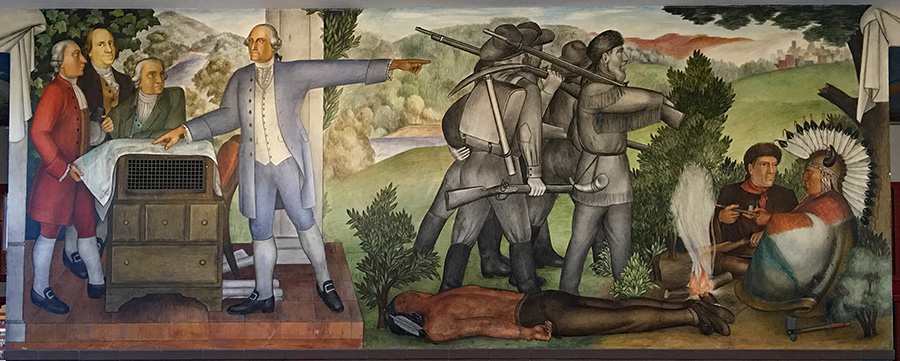
18:03 Isn’t there also, you know, San Francisco School board or there’s a school district that has a WPA mural that the board has decided to cover up because it depicts a murdered indigenous person. Um, and some native students as well as some other, um, other students and educators feel that this is harmful for people who walk by and have to see this. And, you know, this gets back to one of the earlier questions when you’re talking about about how do we reconcile history and be sensitive to the peoples that it affects or the peoples that it depicts, but also not covering up that history or how do you know, how do we, how do we find a middle ground or is there, are we even able to find a middle ground?
 “Life of Washington” Courtesy of the George Washington High School Alumni Association
18:44 Yeah. Yeah. That mural, I know the mural that you’re, you’re talking about, um, is, uh, you know, I, I kind of kind of went through different moments as I was thinking about that mural. Um, where at first I was very alarmed that they were going to, uh, cover it up first. I thought some reports that was they were going to destroy it, but they’re actually against painting over it, which doesn’t always mean that it, you know, cannot be restored right. At some later date or, um, I would prefer to see it moved. I, I do think that, um, it’s maybe an inappropriate word right, for a school today, but the narrative in that, um, Muriel is actually pretty interesting because it’s, you know, talking about the life of, um, George Washington and the artists chose to depict George Washington’s life pretty, uh, you know, complicated way in a way that was very much providing the, kind of a very strong counter narrative to what you would see in an American history textbook that the students might be presented with. And I think that was an interesting artistic choice that was pretty radical actually. And it was another example of a WPA artists that was bringing his politics, I think to play and in creating the mural. But so, um, in showing George Washington as being deeply involved in westward expansion and the costs of that, right, which include the extermination of native peoples, right. Was Pretty, you know, interesting thing to depict in that particular way. Um, I think, and then also the scenes of, um, uh, of enslavement that are in it too.
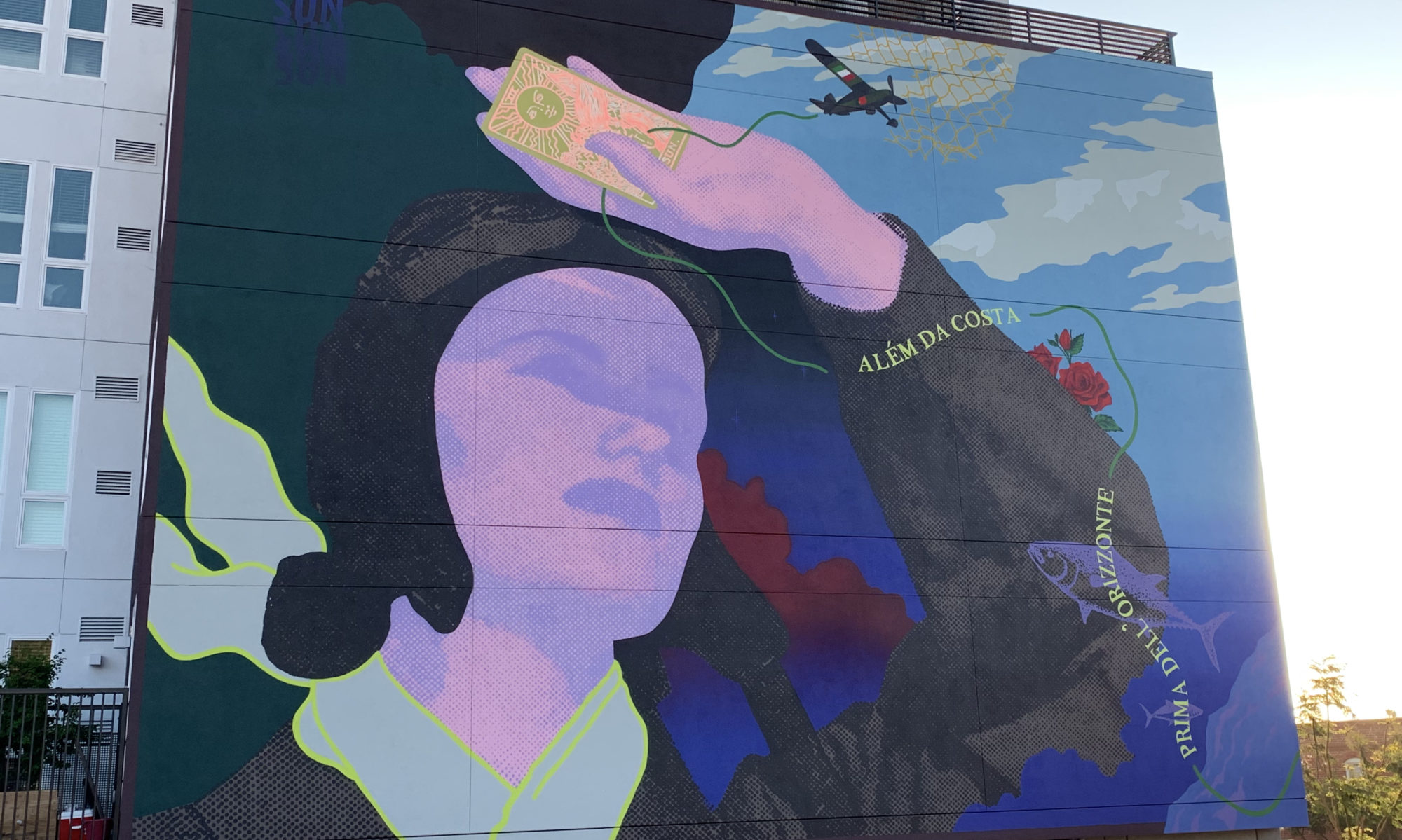
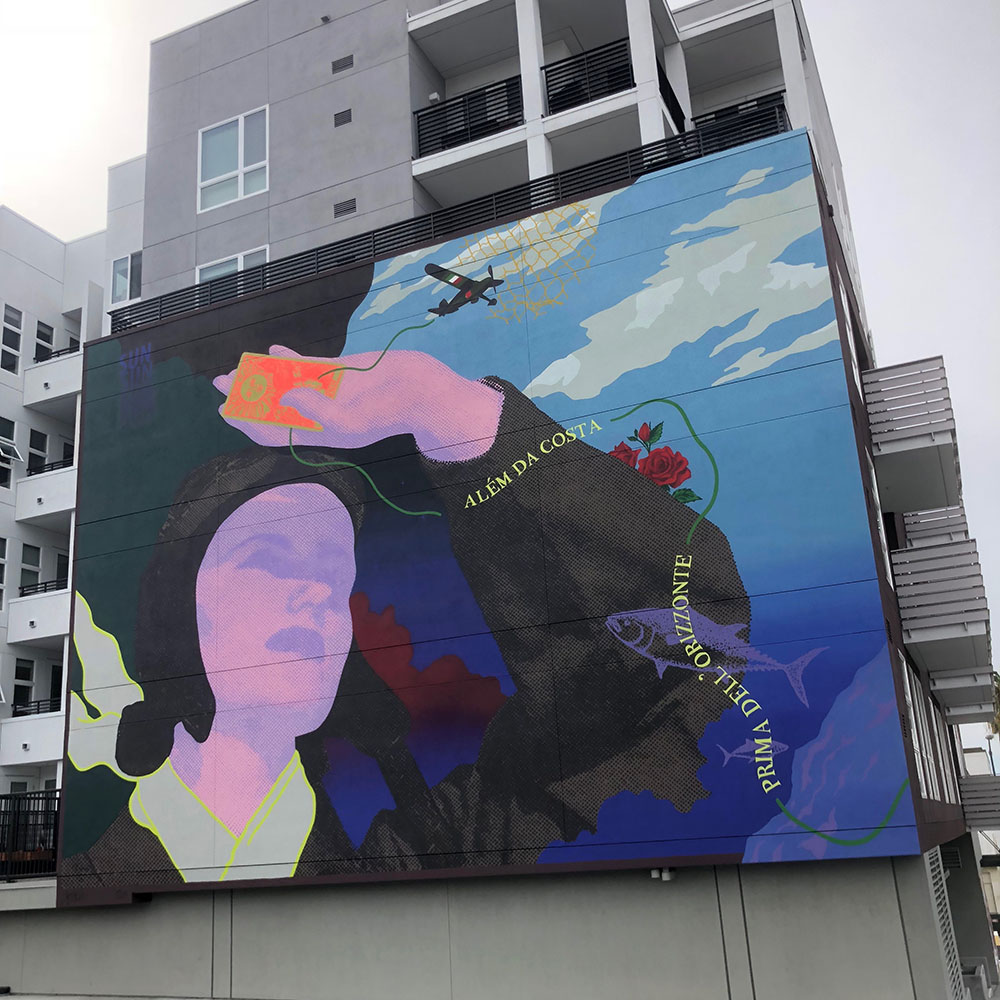
20:20 Murals are not, um, solely a piece of history. And it’s many towns, cities, artists still paint murals for a variety of different reasons. And something that we were also struck about when we were traveling down here. We went to Little Italy, which is, you know, very touristy destination with a lot of Italian restaurants. And it’s really, um, presenting a narrative about, you know, telling immigration in the Italian pride. And we came this huge mural that was painted against this wall of a luxury condo building. And it’s a heralding the history of Portuguese and Italian immigrants who settled in this region that is today known as Little Italy. Even though that history is a constructed a Little Italy became Little Italy in the 1990s. It wasn’t really this sort of, um, idyllic place that has been, that we see when we go down there today. And, uh, this huge, huge mural, um, overlooks ours right next to the San Diego International Airport. And the mural depicts a female aviator with her hand covering her face. She has a Taro card in her hand that’s a Tarot card of the sun, which symbolizes prosperity and wealth, uh, happiness.
 “Beyond the Horizon, Beyond the Sea” Courtesy of Christopher J. McGeorge
21:39 But it also has images of fish too. And so you see themes about the fishing industry and something that’s really important narrative that is that you see here in the San Diego, in the San Diego state mural as well as represented here. And it brings to mind again if we can talk about this, you know, how murals are being used today to push forward a very particular narrative and how that narrative might be perhaps not even overtly political, but it’s certainly pushing forward a certain type of history that is constructed. And if we go back to this idea that all histories are constructs in some way and then are pushing some sort of perspective. Um, I think it’s really interesting in the context of how things are being created and recreated.
22:25 Oh, we have two more other closing questions. One is, um, if all murals or public art in San Diego, we’re to be erased, but you can save only one that’s been, encapsulates maybe an essence or distills down the essence of San Diego where it had an important historical moment for San Diego.
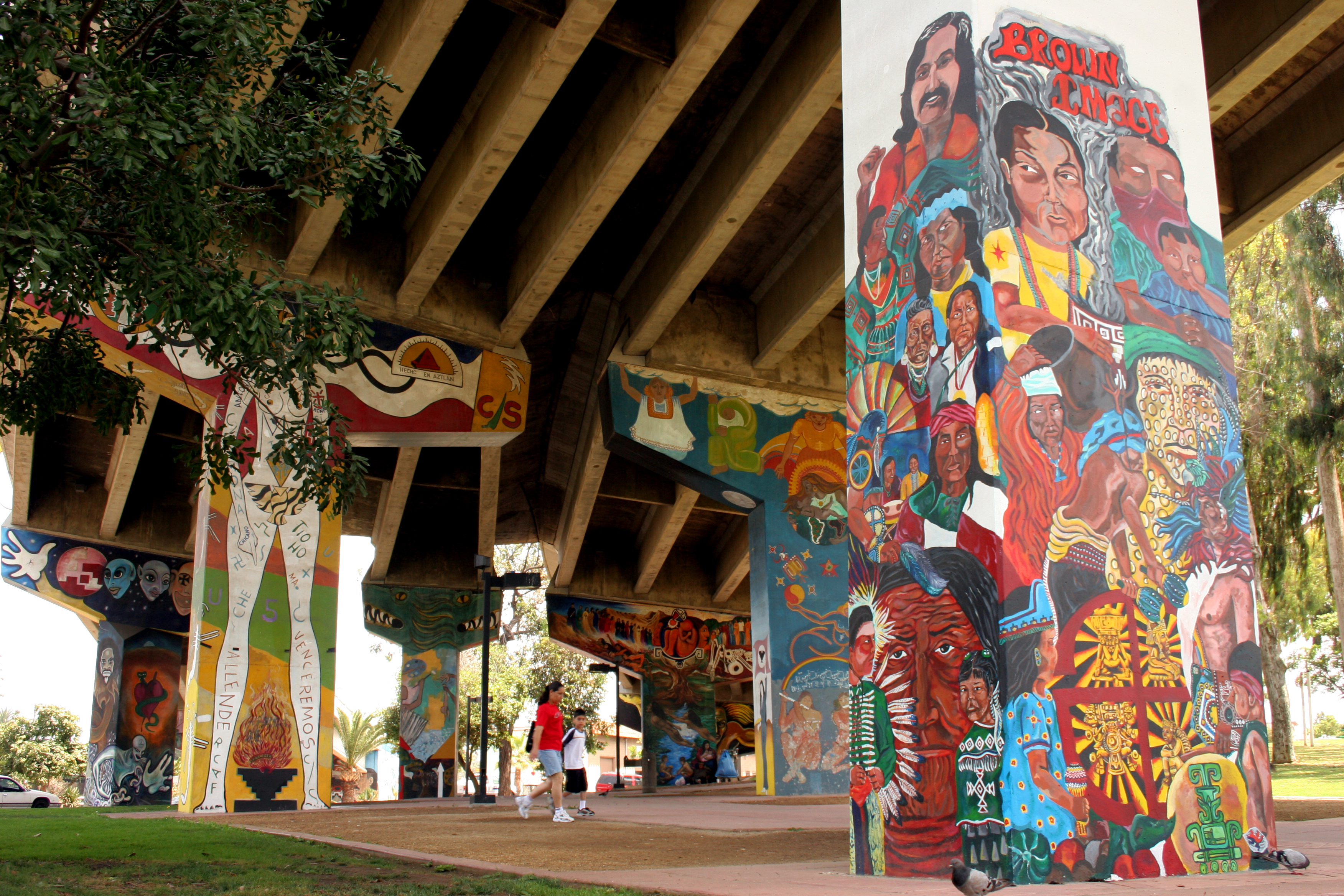
22:41 Which one piece? Or maybe, which one area? I guess would you, would you save? Yeah. You know, I’d probably, I’d probably make a strong case for, for Chicano Park, I think in the murals that are there in part because of the context of where it is to have, um, and is this story, you know, so many urban centers have this history of, of urban renewal and, and the trauma that that creates for especially,
 “Chicano Park Murals” Courtesy of kellinahandbasket
23:08 minority communities and working class communities. And so the fact that these murals are painted on the underside of, of a physical structure that is part of that story of urban renewal I think is pretty, pretty significant. Right? So the place matters. And that’s important for murals I think too.
23:26 but I’m sure there are plenty of other examples too, but that’s, that’s probably my one I would love you for.
23:32 And then our final question, which is also similar to to that on, but let’s say the WPA relaunches in 2020 and you’re brought on as a consultant to develop a public work of art. Um, what’s the work that we need right now that’s going to best represent this current moment to people? Maybe for the future. So a hundred years from now, how do we kind of encapsulate this moment in history? Um, what, what are your suggestions as, as the consultant for that project?
24:02 Well, we’re in desperate need, I think of, um, murals that do some of the work that I think WPA and murals were trying to do, right? Which is to celebrate the contributions of everyday people in recent past, right. Um, and the social movements that have emerged, you know, recently I’m thinking of, um, black lives matter and me too movement and movements for immigrant rights and thinking about ways in which to craft a narrative that’s really, um, you know, both multicultural but also thinking about creating a new, a new kind of master narrative of American history, right. If we want to do that, if that’s a worthy project, um, a new narrative that can then be inclusive of all these different voices and that has that same kind of populous stage maybe that some of the WPA murals have right. Of trying to present, um, and elevate the contributions everyday people. I think that we still need that today. So,
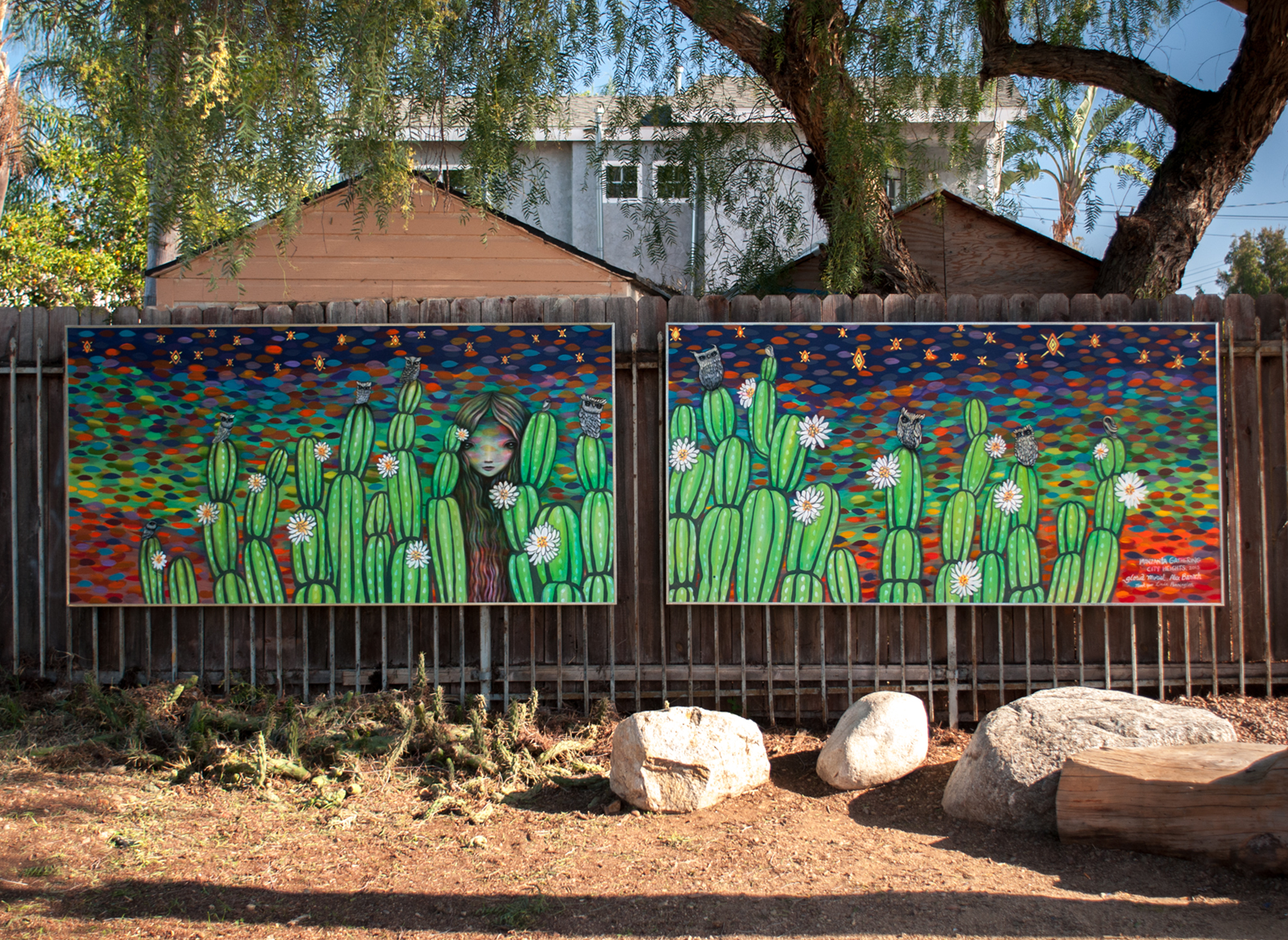
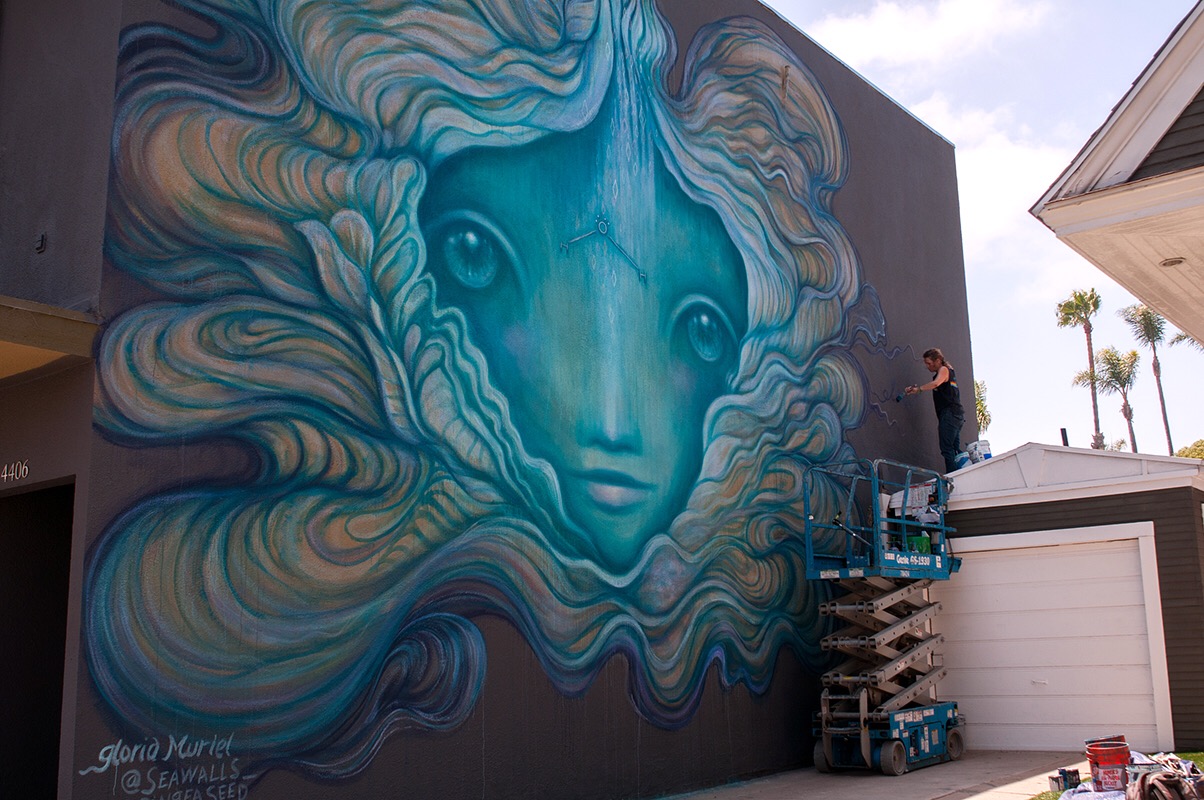
25:13 The first part, we spoke with Orion Teal, a history professor, uh, from El Camino College and we talked about more of the history of murals, particularly, uh, from the works progress administration. In the 1930s, we talked about a mural that’s in the San Diego State University Library that shows, uh, the history of the fishing industry and you know, deals with some issues of, uh, immigration, immigrant labor, gender, um, and some other, uh, things like that that we delve into a little bit. And in this half of the episode we would kind of wanted to bring it forward and talk about contemporary murals and, um, you know, get the perspective of contemporary artists working in that scene working in San Diego. Um, and so we’re really excited to have you here with us. Um, so this, we’re speaking now with Gloria. Muriel, uh, she is a San Diego based artist who specializes in fine art murals and installations. She painted her first mural here in San Diego in 2011. I think that’s right. That’s true. Great. Uh, and her paintings often give faces to leaves, trees, uh, water. And then also other parts of nature. So she creates these sort of surreal spaces for contemplation. So hi, Glow. Welcome to the PODpodcast.
 “Manzanita Gathering” Courtesy of Glow (Gloria Muriel)
 “Love Your H2O” Courtesy of Glow (Gloria Muriel)
26:31 So first we’d like to just give you an opportunity to maybe introduce yourself a little bit more. Um, tell us a little bit about your background and how you got into art, how long you’ve been painting.
26:43 Um, let me see. Background. I was born in Mexico City and uh, then as a kid we went to [inaudible] valley, which is about two hours of San Diego. And um, I think of living in the small town.
27:06 Either then you get bored and just watch TV all day. Cause also the weather is terrible here or you get creative. No, and I feel this environment helped me a lot to just start looking for stuff to do. Also internally, you know, as an, as a, as an individual like, okay, well what are you like to book you for different things. And I felt that the most important things for me to have to be okay with myself was nature. You know, just having a fish then or going out to look at the stars at night, that, that really helped. So, um, I think that’s how I got into art than I,
27:51 I guess. What are some of the influences or maybe tools or people or experiences that have shaped your own art? Um, I like, uh, I really like that’s a real artist. Like Dali, like Khalo. Um, I love all the Mexican muralists we know that were so powerful. They of course they were more political, no, and cultural movements, but just the fact that they got themselves out there on walls and being as big as they, they weren’t and not, not caring whether they were going to get killed or, you know, and no. [inaudible] I know social, political, that they, they were out there doing their work. That was very inspiring to me.
28:46 Yeah. I’d like to actually maybe talk a little bit more about the, um, the politics of, of murals and, and maybe some of your own work in a San Diego is this place that has a lot of different intersections of identities. You know, it’s a border city, it’s a port city, it’s a military city. It’s a really like multiethnic city and community. You know, you were born in Mexico, Kinda grew up along the border. You live now in San Diego. And so I guess how do you maybe see the politics of this particular place influencing your own work? Um, I know we’ve talked a little bit about how you, your work kind of focuses on depictions of nature, more surreal landscapes. Is that a way day? I just
29:27 know I’m completely opposite to what a mural, you know, like an old school girl as opposed to be off more about a community, uh, cultural, you know, seeing or, uh, uh, political, uh, movements, you know, but I deal with me, it’s completely the opposite. I don’t, I, I don’t want it to have either, you know, I’ll call picture or you identify yourself with people of color. You know, it’s, it’s, it’s for everyone. It’s for everyone that sees it or that it looks to me as an individual, something that could, that can inspire you to be a better person. And I feel that that past history, murals, murals in the past were more based on a [inaudible] you know, enough, something that already happened with the they want it to, to express, you know, the movement and what is happening, what we can do a site know some somehow. Also,
30:34 I mean I think we might be able to look then maybe at WPA murals or some of these other other artists that you’ve been talking about. Uh, like a Mexican muralists as well as being involved in like a particular politics for a quality. And maybe your own work is more about a politics of inclusion where you’re trying to not necessarily speak or create work for a particular community or particular history. But this has like, okay, does that fit
31:02 way my art and I love words and I’m like, well, I don’t know. It’s also self exploratory, you know, I feel that what works for me, like what makes me find myself as an individual. And then now of course I’m an artist, but it helps me understand myself and it’ll help someone else, you know, when you see it either like emotionally, I don’t know how to explain it but, but yeah, it’s not gender, you know, the German or culture or border because a lot of a lot of people ask me, well you’re a border artist. Yeah. How do you feel about that? I was like, well I think I embrace it. You know, I embrace both sides of the border. I write that I can go to Mexico and,
\31:52 and, and have all the, you know, the nice things about them and the people and, and then I can go back to San Diego and also, you know, to embrace both of the borders. Cause we’re also doing exactly the opposite. Sometimes you, you tell what you don’t like, you know, and in art or just to make an impression of a movement. But I feel that if you express different than you can even make more, more of a, of a positive, positive, um, environment. It’s, I don’t know if I worry about my own, my own art. No, my own process.
32:33 Yeah. That’s interesting to hear you speak of, I mean I guess about other people wanting to or being interested in your identity or maybe constructing this identity for you about being a border artist and wonder, wanting to know how that fits in and you’re, it seems almost like you pushed back against that sort of formulation or maybe push or maybe push back against the idea that because you’re a border artists, you need to depict something about the border is that maybe
33:01 like I’ll empower I need to do something about, I don’t know, the border with Trump for a movement that I, and I’m liking lately the opposite right now. I think there’s a sign for artists also beautified, no beautified show what, what, what’s there to live that’s worth living, you know, Juarez and draw a line by side and all of that. We already know, you know, but if you give it a different perspective of so wounded was never seen and how’s does that on in an insight impacting all I knew that works with me.
33:42 I liked that. I feel like it’s, it’s like saying that your own identity has obviously shaped who you are as an artist, but you don’t have to maybe visualize a certain identity politics in your own art. It doesn’t have to be only about that. Okay.
33:56 Labeling, you know? Yeah. Like I don’t, I don’t love labels and I know that people need navels but it’s just hard because you can’t navel up the person, you know, there’s so much to, to know what, it’s for. This is one, one word, one category.
34:15 That’s great. We talked a little bit earlier, uh, with, uh, professor teal about gentrification just briefly, but some, some people really think murals to this sort of process of gentrification. You know, they are really help can, they can help sort of transform their narratives. They’re often celebrated for being helpful in graffiti abatement or maybe a replacement of graffiti. Um, but they’ve also historically been really important. I think particularly within, um, Chicano populations for celebrating the population who lives there and creating a sense of space and building community. Um, and so the way in which they can, you know, transform communities but also build communities, you know, sometimes that it can maybe be problematic when it’s part of gentrification and also displacing communities. So I’m wondering, I guess how you sort of navigate that as an artist or how, how do you choose projects or do you think about the role of murals in the process of gentrification or new developments and things like that?
35:17 I mean, I feel it’s all of the above because as soon as you don’t know, you have to choose, like you said, um, there’s some projects that are, you know, they’re going to be good for our community of, for our neighborhood. Yet I also was talking to the client. What, what’s the intention? Like what? And then it’s all good.
35:43 Yeah. I guess that was one of the questions also that we had is how, I guess how artists can be respectful of like longterm residents or maybe of local communities when you’re coming in from outside of that and working on, especially in new developments or kind of up and coming neighborhoods or even going into, you know, more established neighborhoods in, in bringing something new in from outside. Yeah.
36:05 What, yeah. That, you know, that are very established, like you said, as a very special, the policies are different with property owners in walls and permit, uh, depends on what zip code you’re in. Uh, I guess one of the last topics of your, or something that we’ve been repeatedly returning to as well as sort of that is that relationship between history and murals. You know, so we’re interested in how euros are used to create a sense of the past or also documents and [inaudible] in the present. And you give something to the future as well, you know, and about who’s included in the stories and who’s depicted and you know, you create these beautiful fantasy worlds and they’re kind of maybe playing with a sense of time or maybe creating worlds that are outside of time or at least outside of our own time. And so your work’s like maybe not necessarily historical and content, right, or it’s not like depicting a historical scene or moment, but it is still part of a history, like a history of murals or history of picture making more broadly. And then we noticed in your, uh, in your artist statement on your website that you, you say that you’re hoping to let me, let me read it so I get it right. Um, awakened hearts and open minds to the raw novelty of the present moment. So if maybe even just tell us a little bit more about that, that idea of how you see your art emphasizing the present moment
37:27 you got. The Bush team that I work with are the what word lobby elements. Uh, whether it’s mother nature as I was before we were here, now we’ve are, all of us were here. So I feel it’s like a, a meeting between the humans connecting with, with nature, what is the present moment with their own hearts, with their own awareness. You know, that’s, that’s what I want. I want to create pieces that when you look at them some how they, they can, I don’t know if it’s being used as a breakthrough in your own journey.
38:09 So then maybe this is a, if all the murals and public art were to be erased in San Diego and you could only keep one piece of art or, um, that kind of encapsulate San Diego and embodies identity. Yeah. What would it be? One I don’t know. Chicano park and fields that you’re going to, you know, history. You don’t want Chicano Park to be erased. No one, it’s like a such a, I don’t know, such a historic space or, or Chicano artists and you know, history that I think that we should preserve that
38:59 this has been PODpodcast. Thank you for tuning in.
Music from https://filmmusic.io
“Deep And Dirty” by Kevin MacLeod (https://incompetech.com)
License: CC BY (http://creativecommons.org/licenses/by/4.0/)